Import & Export Division

Move goods across borders, without the paperwork stopping you

OnnTime Solutions is an IEC-registered Indian trading and trade-services firm. We handle the customs, the carrier and the documentation, so a shipment leaves on the date you promised your buyer.

Photo: Container ship at the Port of Felixstowe by John Fielding, licensed CC BY 2.0 — cropped and resized.

What we handle

Cross-border trade fails on details — a mis-declared HS code, a missing AD Code, a certificate the destination customs wanted and nobody asked for. These are the pieces we take off your desk.

01

Customs clearance

Filing and follow-through with customs at both ends — accurate declarations, correct classification, and coordination with the appraising officer so consignments are not held for want of an answer. See what that covers ›

02

Freight forwarding

Sea and air, full container (FCL) or shared (LCL), and international courier for samples and small parcels. We book the space, track the leg and tell you when the plan slips.

03

Registrations & licences

Importer-Exporter Code, AD Code registration at your port, GST LUT for zero-rated exports, and product approvals such as FSSAI or BIS where the goods call for them.

04

Trade documentation

Commercial invoice, packing list, shipping bill, bill of lading or air waybill, and certificate of origin — prepared to match one another, because customs reads them side by side.

05

Warehousing & handling

Consolidation, palletising, labelling and bonded storage, so duty falls due when goods move to their final destination rather than the day they land. Bonded warehousing ›

06

Sourcing & buyer support

Supplier identification, sample coordination, quality checks before dispatch, and help reading an overseas quotation — Incoterms, payment terms and who actually carries which cost.

Customs clearance, by mode and direction

A customs desk is not one job. An air import clears against a different clock, a different set of charges and a different examination regime than a sea export. We work each of the four lanes on its own terms.
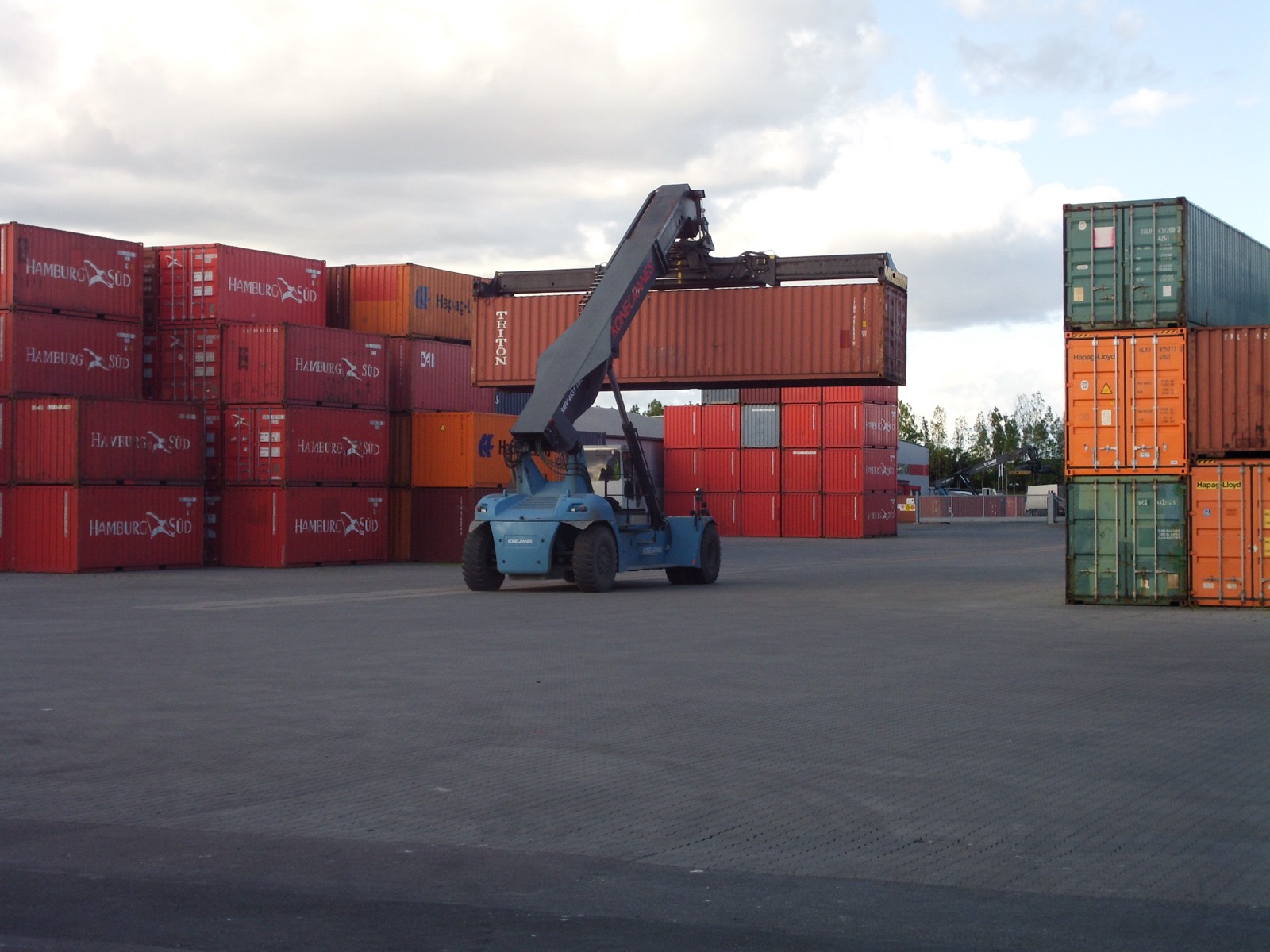
Container terminal with stacked containers and gantry cranes
Where the clock starts. A consignment clears against the terminal's schedule, not yours — which is why filing runs ahead of arrival wherever it can. Photo by Jan Pešula — Wikimedia Commons, CC0.
Sea · Import

Sea import clearance

From the arrival manifest to delivery order, with the free-days clock running from the moment the vessel berths.

  • Bill of entry filed on ICEGATE ahead of arrival where possible
  • HS classification, valuation and duty working before you commit
  • Examination attended, queries answered the same day
  • Delivery order, CFS charges and detention watched so demurrage does not start
Air · Import

Air import clearance

Air cargo is chosen because it is urgent, so the clearance is run to the hour rather than the day.

  • Filing against the airway bill as soon as the flight manifests
  • Courier and express consignments, including samples and spares
  • Regulatory no-objections — FSSAI, drug controller, wireless — arranged in parallel, not after
  • Warehouse demurrage tracked from the first free hour
Sea · Export

Sea export clearance

Shipping bill to Let Export Order, timed against the cut-off rather than the sailing date.

  • Shipping bill filed under the correct scheme — drawback, RoDTEP, advance authorisation
  • AD Code and bank account registered at the port of loading before booking
  • Stuffing supervised, factory or CFS, with the examination report closed out
  • LEO obtained and the e-BRC trail set up for your FEMA closure
Air · Export

Air export clearance

For perishables, samples and anything where the buyer's deadline is the real constraint.

  • Filing and hand-over inside the airline's cut-off
  • Dangerous goods and perishable cargo handled to IATA requirements
  • Certificate of origin, phytosanitary and inspection certificates arranged alongside
  • Post-shipment documents to your bank the same week

Registrations and approvals we arrange

Most consignments that sit at a port are not stopped by duty. They are stopped by a registration nobody obtained.

IECImporter-Exporter Code from DGFT — the licence to trade at all.
AD CodeBank authorised-dealer code registered at each port you ship from.
GST LUTLetter of undertaking, so exports go out zero-rated instead of tying up cash in IGST.
FSSAIImport licence and clearance for food, beverages and ingredients.
BISStandards registration for goods under the compulsory certification list.
WPC / ETAWireless approval for anything with a radio in it — routers, tags, devices.
LMPCLegal Metrology certificate for pre-packaged commodities sold by weight or measure.
EPRExtended producer responsibility for plastic packaging, e-waste and batteries.

What actually holds a consignment

  • The wrong HS code. It changes the duty, and it changes which agency has to clear the goods. Fixing it after filing costs days.
  • Valuation queried. If the declared value sits below what customs expects for that commodity, the file goes to the appraiser and stays there until it is answered.
  • A missing registration. BIS, WPC or FSSAI cannot be obtained while the container waits — they are applied for before the goods ship.
  • Papers that disagree. Invoice, packing list and bill of lading are read side by side. One mismatched weight or description is enough.
  • AD Code not registered at that port. The shipping bill will not file. This is discovered at the worst possible moment.

We check all five before a booking is confirmed, not after the goods have moved.

Customs bonded warehousing — Sections 57, 58 and 58A

Bonding moves the duty bill. Goods are deposited against a bond instead of being cleared on arrival, and the duty falls due only when they leave the warehouse for the home market — or is never paid at all, if they are re-exported. For an importer holding stock for months, that is working capital that stays in the business.

We specialise in setting up and running these facilities: the licence application, the bonds and security, the statutory records, and the day-to-day traffic in and out that keeps the licence intact.
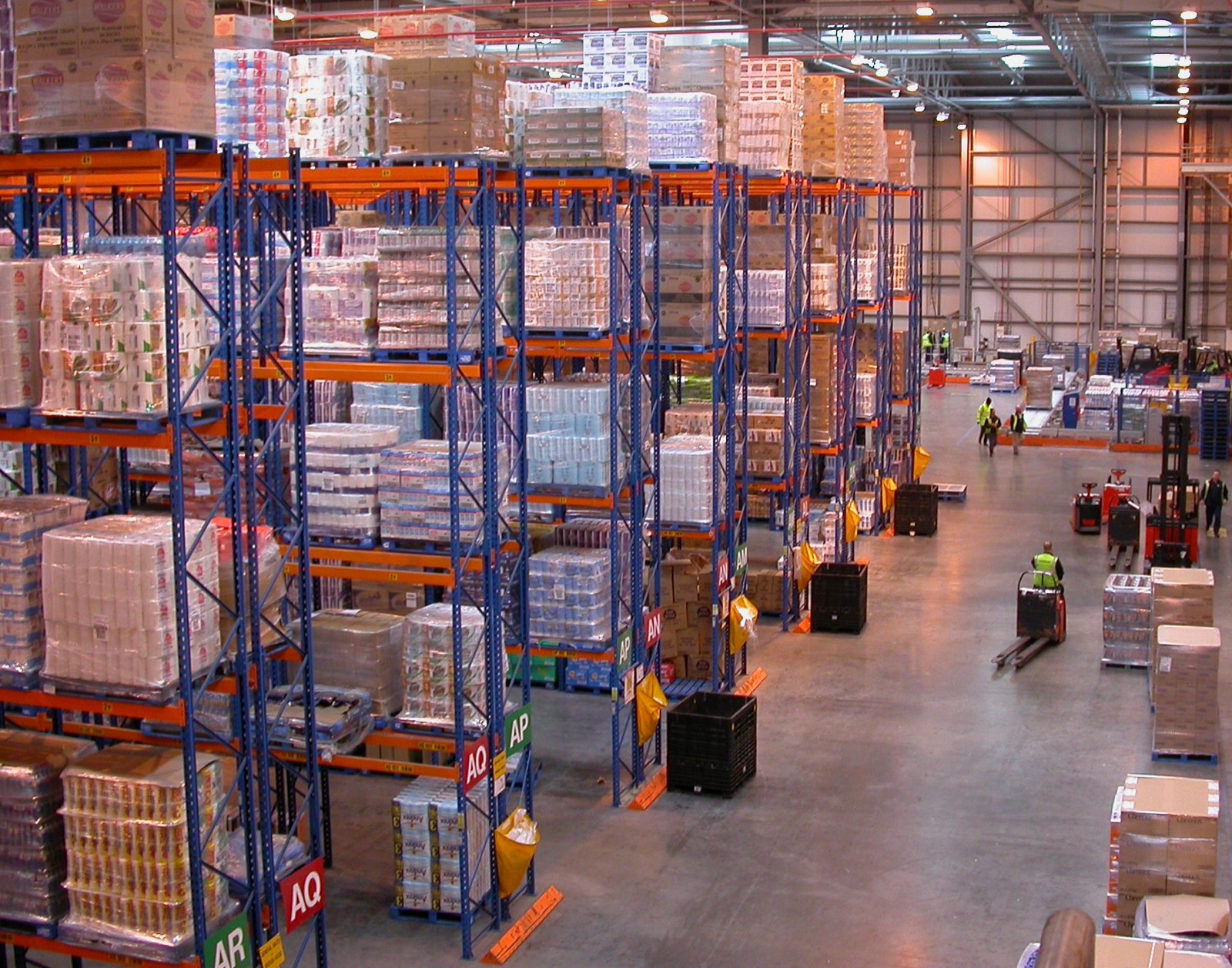
Pallet racking inside a distribution warehouse
Racking is the easy part. A bonded facility is a licence with a permanent compliance obligation attached. Photo by Nick Saltmarsh — Wikimedia Commons, CC BY 2.0.
Section 57

Public bonded warehouse

Licensed to a warehouse operator, open to any importer to deposit dutiable goods.

  • Licensed by the Principal Commissioner or Commissioner of Customs
  • Suits third-party logistics operators and shared storage
  • Governed by the Public Warehouse Licensing Regulations, 2016
  • Custody and handling under the Warehouse (Custody and Handling of Goods) Regulations, 2016
Section 58

Private bonded warehouse

Licensed to an importer for goods imported by or on behalf of the licensee — your own stock, your own premises.

  • The usual route for a manufacturer or trader holding imported stock
  • Governed by the Private Warehouse Licensing Regulations, 2016
  • Solvency certificate, security and a licensed warehouse-keeper required
  • Can be combined with manufacture in bond under Section 65 (MOOWR)
Section 58A

Special warehouse

For notified goods held under the physical control of customs — the premises are locked by the proper officer.

  • Nothing enters or leaves without the proper officer's permission
  • Notified classes include gold, silver, other precious and semi-precious metals and articles thereof
  • Also duty-free shops, ship stores, airline stores and diplomatic supplies
  • Special Warehouse Licensing Regulations, 2016, and its own custody and handling rules

What we actually manage

A bonded warehouse is a licence with a permanent compliance obligation attached. Most of the work is after the licence is granted.

Licence applicationSite plan, solvency certificate, security, and the warehouse-keeper who must be appointed and approved.
Bond & security — s.59The triple-duty bond, the bank guarantee, and keeping both live as stock turns over.
Into bond — s.46 & 60Into-bond bill of entry, assessment, and the order permitting deposit that starts the clock.
Warehousing period — s.61One year for ordinary importers, extendable; interest once goods sit beyond ninety days. Watched, not discovered.
Owner's operations — s.64Inspect, sort, sample, re-pack or re-label the goods while they remain in bond.
Transfer — s.67Moving warehoused goods from one warehouse to another without duty falling due.
Out of bond — s.68Ex-bond bill of entry, duty and interest paid, goods released for the home market.
Export — s.69Shipped out of the warehouse without ever paying the import duty.
Digital records & returnsThe prescribed stock account, monthly returns, and the audit trail an officer will ask for.
Manufacture in bond — s.65MOOWR, 2019: import inputs and capital goods duty-deferred, manufacture, then export duty-free.

Where a bonded warehouse gets into trouble

  • The clock runs out. Goods past the Section 61 period attract interest, and then demand under Section 72 as improperly removed. Nobody notices until the officer does.
  • Stock account and physical stock disagree. The first question at any audit, and the hardest to answer after the fact.
  • The bond is exhausted. A triple-duty bond covers only so much; the next consignment cannot be bonded until it is topped up.
  • Section 58A premises entered without the officer. The warehouse is locked by customs for a reason, and this is a licence condition, not a formality.
  • Warehouse-keeper lapses. The licence rests on an approved keeper being in post. A resignation nobody reported is a live exposure.

We run the calendar, the stock account and the bond balance as a single job, because in practice they fail together.

How a shipment moves

Every export follows the same spine, whether it is one carton of samples or a full container.

A container crane lifting a container at a port terminal
Step five of six. Loading is the visible part; the five steps around it are where shipments are actually won or lost. Photo by Bernard Spragg — Wikimedia Commons, CC0.

Enquiry and costing

You tell us the goods, the destination and the Incoterm. We come back with landed cost — freight, duty, handling and documentation — so there are no surprises after the buyer has agreed a price.

Registrations in place

IEC, AD Code at the port of export and a GST LUT if you are exporting without paying IGST. First-time exporters usually discover the AD Code requirement on the day of shipping; we do it first.

Documents prepared

Invoice, packing list and certificate of origin drawn up together so weights, values and descriptions agree across all three. Mismatches between them are the most common reason a consignment is queried.

Shipping bill filed

The shipping bill is filed with customs, goods are examined where required, and the Let Export Order is obtained. This is the point at which the export legally happens.

Loaded and in transit

Cargo is handed to the carrier and the bill of lading or air waybill is issued. You get the document set your buyer's bank will ask for.

Delivery and realisation

Customs clearance at destination, delivery to the consignee, and the bank paperwork that closes the transaction under FEMA on the Indian side.

The documents behind every export

Most shipments need four to six core documents. Product type, destination and payment terms decide what else is added.

Commercial invoiceThe bill to your buyer. Also the basis for customs valuation, your GST tax invoice, and the document your bank uses for FEMA compliance.
Packing listWhat is in each package — description, quantity, gross and net weight, dimensions, package numbers. Used by customs and by the buyer to verify what arrived.
Shipping billYour formal request to customs to export. Also called the bill of export; goods cannot be loaded onto a ship or aircraft without it.
Bill of lading / air waybillIssued by the carrier. It is the contract of carriage, the receipt for the goods, and — for a negotiable bill of lading — the document of title.
Certificate of originStates where the goods were made. It decides the duty your buyer pays, and whether a preferential trade agreement applies.
Product-specific papersExport licence, insurance certificate, phytosanitary or fumigation certificate, inspection report — added where the commodity or destination requires them.

Why work with OnnTime

IECRegistered with DGFT since 2025
2020Trading as a partnership firm
Sea · AirFCL, LCL and courier
End to endRegistration through realisation

What we trade

Categories we handle most often, for both our own account and on behalf of client exporters.

01

Textiles & garments

Cotton fabric, home textiles, readymade garments and made-ups. Shipped in FCL from the northern belt to Gulf and European buyers.

02

Agro commodities

Basmati and non-basmati rice, whole and ground spices, tea and pulses — with the phytosanitary and APEDA paperwork each destination asks for.

03

Handicrafts & home décor

Brassware, wooden and marble artefacts, rugs and furnishings. Consolidated LCL for smaller buyers who cannot fill a container.

04

Engineering goods

Auto components, fasteners, hand tools and light machinery — the categories where correct HS classification decides the duty your buyer pays.

05

Leather & footwear

Finished leather, bags, belts and footwear, moving mainly by sea with air freight kept for samples and urgent replenishment.

06

Ayurvedic & herbal goods

Herbal extracts, oils and personal-care products, where FSSAI and destination-country labelling rules decide whether a shipment clears.

Where we ship from, and to

Ports & gateways we clear through

  • JNPT (Nhava Sheva), MaharashtraPrimary west-coast container gateway
  • Mundra & Kandla, GujaratBulk and container, Gulf and Europe routes
  • Chennai & Kattupalli, Tamil NaduSouth-east Asia and Far East sailings
  • ICD Tughlakabad & Patparganj, Delhi NCRInland stuffing close to our Noida base
  • Delhi IGI & Mumbai BOM air cargoSamples, urgent and high-value consignments

Markets we ship to

  • GulfUAE, Saudi Arabia, Oman, Qatar
  • EuropeUnited Kingdom, Germany, Netherlands, Spain
  • North AmericaUnited States and Canada
  • Asia-PacificSingapore, Malaysia, Australia
  • Neighbouring marketsNepal, Bangladesh, Sri Lanka
Importer-Exporter Code
AAHFO0487C
GSTIN
09AAHFO0487C1ZA
PAN
AAHFO0487C
Constitution
Partnership firm, since 2020

Tell us what you are shipping

Send us the goods, the destination and roughly when you need it there. We will come back with what it costs, what it needs, and how long it takes — before you commit to anything.